
The Number Nobody Believes
₹8,00,000. That’s the entire below-the-line and above-the-line budget for a 90-minute feature, shot over 16 days. It sounds impossible until you break down where the money actually went — and, more importantly, where it didn’t.
Camera and gear: ₹1.2L, renting a Sony A7S during lockdown with a basic prime lens kit for the shoot block, negotiated down to a flat rate instead of daily pricing.
Locations: Almost zero cash spent. The film was written around locations the director already had access to — support from a friend in Bihar, an arranged shop, a college, and a house whose owners let them shoot for free.
Cast: A mix of theatre actors working for deferred payment, plus two non-actors cast from the neighborhood who were paid a flat daily rate.
Food and stay: The single biggest line item. Sixteen days of feeding a 12-person crew ran close to ₹1.5L — home-cooked meals arranged on set turned out cheaper than restaurant catering.
Post-production: Edited by the director on a borrowed laptop. Sound design and color correction were self-done; the DOP and costume designer were both friends who came on board.
What Actually Broke the Budget
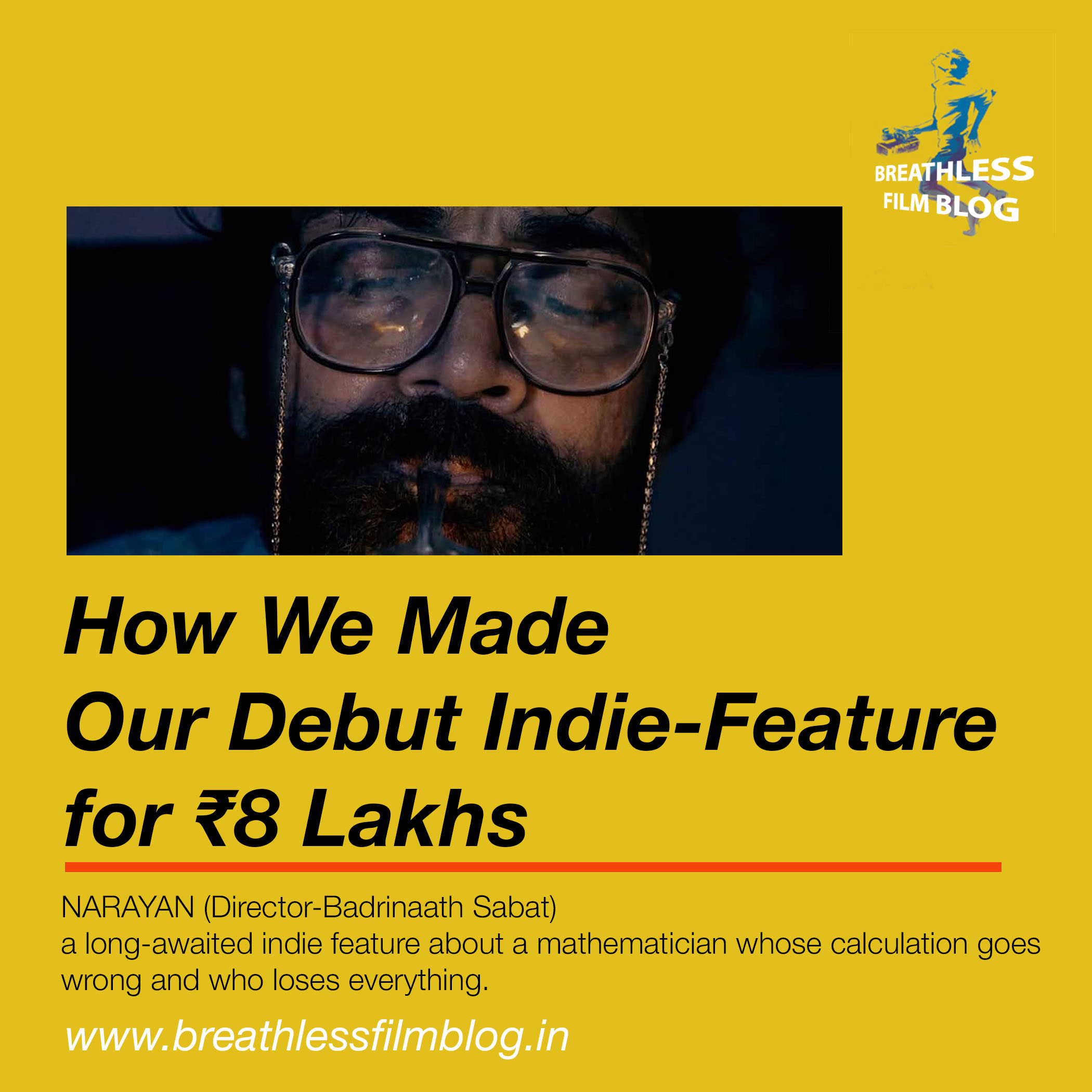
Not the gear. Not the cast. It was sync sound cleanup — the house sat on a busy lane, and every scene needed ADR passes they hadn’t budgeted for. That ate nearly ₹40,000 they’d earmarked for a poster designer, so the poster ended up being a frame grab, color-graded and typeset by a friend for a bottle of whisky. A few post-production tasks are still pending, and the team is working through them — so that this long-awaited indie film can soon be shown, first to themselves, and then to a few others who’d like to join for a watch.
The Real Lesson
Writing the script after scouting free locations — not before — was the single decision that made the budget possible. The story bent around what was available, not the other way around. For any filmmaker starting out with a number like this, that’s the trade worth making first.
“We’re still struggling to manage more funds for marketing,” Badrinaath says. “I’m the kind of filmmaker who makes films for himself, and scraps them if I don’t like the result. I enjoy the process most — the camera, the people, the emotion, the energy on set. After completion, I always feel like what I made isn’t quite what I set out to make.”
It was a lovely conversation with indie filmmaker Badrinaath Sabat.
Have you made a feature on a shoestring budget in India? Breathless Film Blog wants to hear how — write to us.