


We live in loud, polarised times. Outrage has become a currency, and winning an argument often matters more than understanding it. Violence is no longer only physical. It can be verbal, digital and ideological. A generation raised on reels and comment-section battles has heard the name of Mahatma Gandhi countless times, but how many have actually encountered his ideas?
On this Gandhi Jayanti, his 157th birth anniversary, cinema may be the best way to answer that question. Not through another perfect statue or predictable biopic, but by exploring the questions he spent his life wrestling with.
How do we resist injustice without becoming what we oppose? Can truth be pursued without violence? Can one person change a society simply by changing how they respond to power?
Gandhi Was an Experiment, Not Just an Icon
The Gandhi who lived was far more complicated, and therefore far more cinematic, than the Gandhi of posters and textbook photographs.
He called his autobiography The Story of My Experiments with Truth, and the word “experiments” matters. Gandhi never claimed to have found all the answers. He treated his life as a continuing test of his own beliefs against reality, experimenting with diet, discipline, simplicity, community living, politics, religion and resistance.
Some experiments were deeply personal and some remain strongly criticised. But his willingness to expose his own contradictions is what makes him such a compelling character. Imagine a protagonist who keeps testing his convictions against the world.
He was also a lawyer who struggled early in his career, and a husband and father whose family relationships were complicated. As a leader he faced opposition not only from the British but from within the freedom movement. B.R. Ambedkar challenged him on caste and political representation. Subhas Chandra Bose pursued a radically different path to independence. Revolutionary groups rejected his methods.
These conflicts don’t diminish Gandhi. They make him more interesting.
Ahimsa Was Never Simply
One of the biggest misunderstandings of Gandhi is that ahimsa means being passive or peaceful. For him, non-violence was not cowardice or surrender. It was a form of resistance.
Satyagraha, the insistence on truth, was built on the idea that injustice could be confronted without copying the violence of the oppressor. That is a remarkable dramatic premise.
A person is humiliated. They have every reason to retaliate. The audience expects the punch. The character refuses to strike.
That doesn’t end the conflict. It begins it.
What happens when the opponent becomes more violent? What if non-violence costs you your livelihood, your freedom or your life? These are not abstract questions. They are dramatic situations, and they could make powerful cinema.
The Cinema of Truth
Truth can be uncomfortable. What if a leader admits he was wrong? What if a hero confesses his failure instead of hiding it? What if a movement must face its own contradictions?
Modern cinema loves morally complicated characters: antiheroes, unreliable narrators, protagonists haunted by guilt. Gandhi offers a different kind of lead, one who deliberately examines himself. Instead of asking “How do I defeat my enemy?”, he asks “Am I becoming the person I am fighting?”
That question could anchor an extraordinary screenplay.
Dozens of Films in One Life
Gandhi’s life doesn’t need one giant biopic. It could become dozens of films.
- His South African years hold multiple stories of discrimination, resistance and political awakening.
- His relationship with Kasturba Gandhi could become an intimate domestic drama.
- His relationship with his sons could become a family film about living with a father who belongs to a nation.
- His disagreements with Ambedkar could become a political drama about caste, representation and competing visions of reform.
- His differences with Bose could become a film about two leaders who wanted freedom but disagreed profoundly on methods.
- His fasts could become psychological dramas.
- The Salt March could become a minimalist road film.
- His final years could become a devastating chamber drama about communal violence and the limits of moral authority.
Even one ordinary day in his life could be a film.
Why Have We Explored So Little?
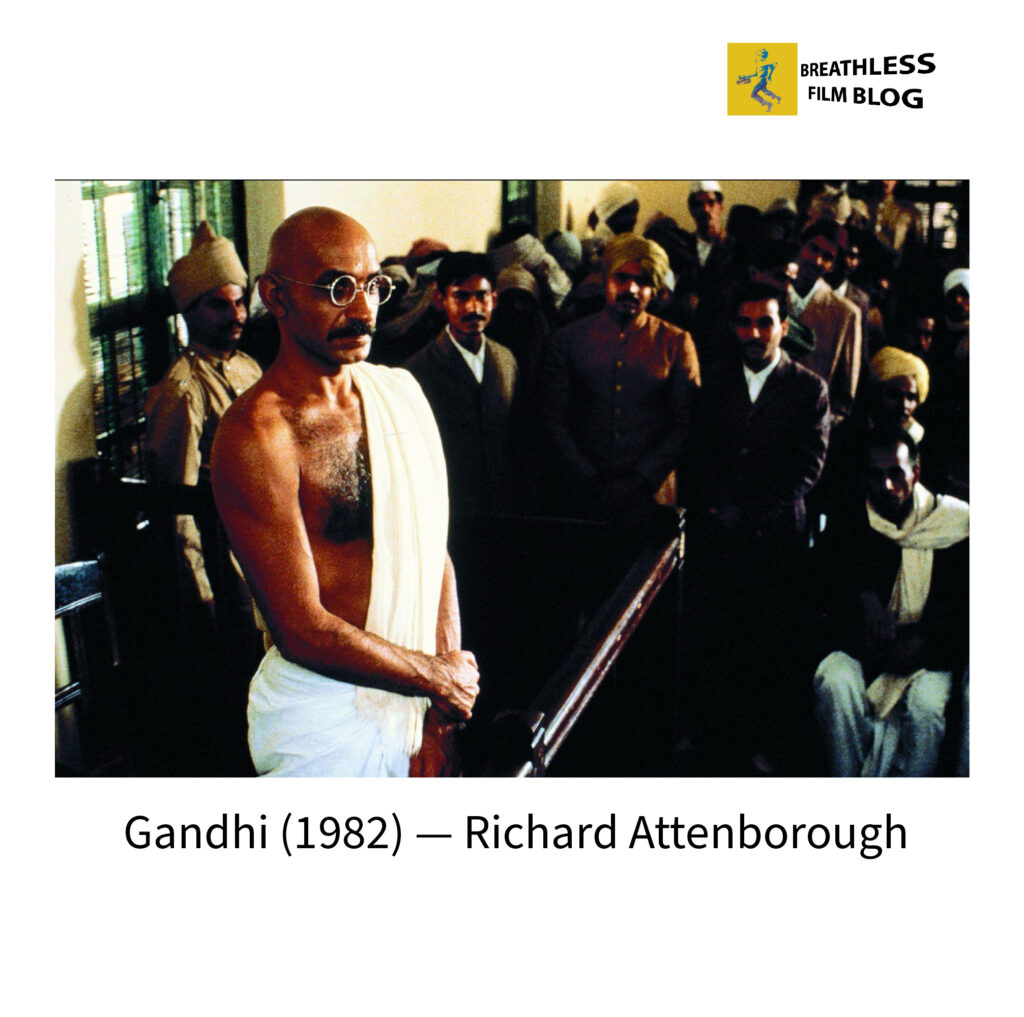
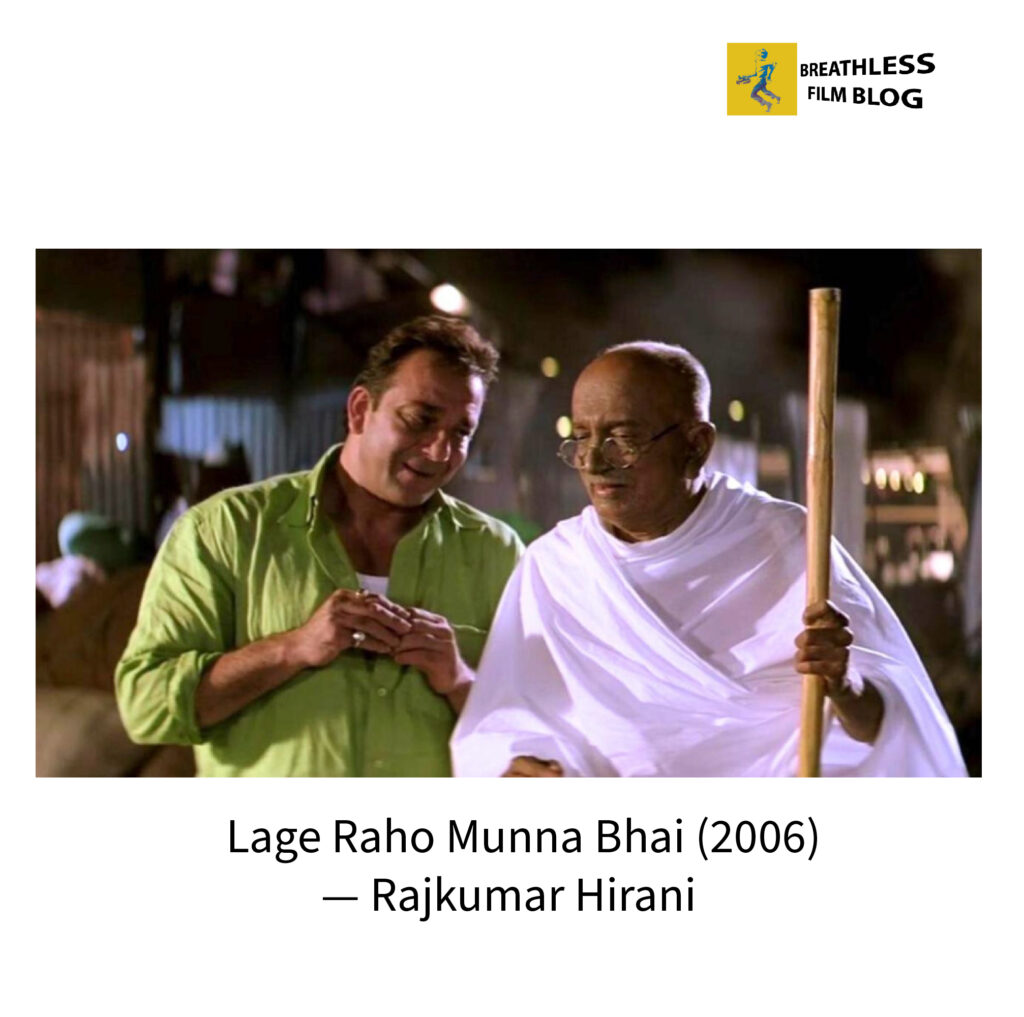
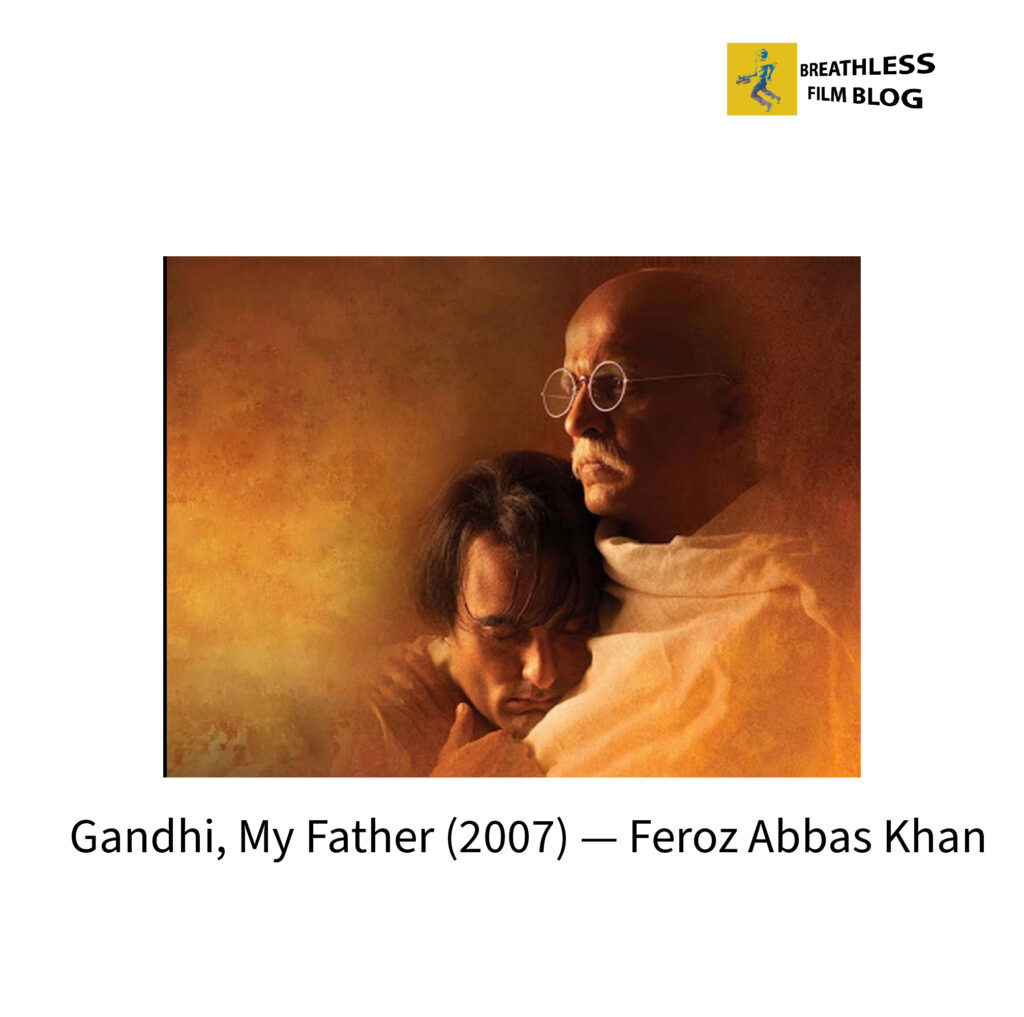
Indian cinema has approached Gandhi only in fragments. Gandhi gave audiences an expansive historical portrait, but it was a British production. Hey Ram looked at him through a fictional man wrestling with hatred and violence. Gandhi, My Father explored his difficult relationship with his son Harilal. The Making of the Mahatma traced his formative years in South Africa. Lage Raho Munna Bhai reinvented Gandhian ideas for popular culture.
Given the scale of his life and the philosophical conflicts within it, the cinematic universe remains surprisingly underexplored.
The Answer Is Indie
The answer may not be another ₹100-crore biopic. It may be the opposite.
A filmmaker doesn’t need to recreate a historical era to explore Gandhian philosophy. Take one village. A mining company arrives and the villagers resist. One young man wants violence, another believes in peaceful resistance, and an old schoolteacher introduces the idea of Satyagraha. Gandhi never appears, yet the whole film is about him.
Or take a contemporary student protest. A police confrontation happens. One student decides not to retaliate, and the consequences unfold over 24 hours. Gandhi is absent, but his question is present.
We don’t need actors in round glasses recreating famous photographs. We can make films about Gandhi without showing Gandhi:
Cinema shouldn’t tell audiences what to think. It should give them a situation that makes them think.